
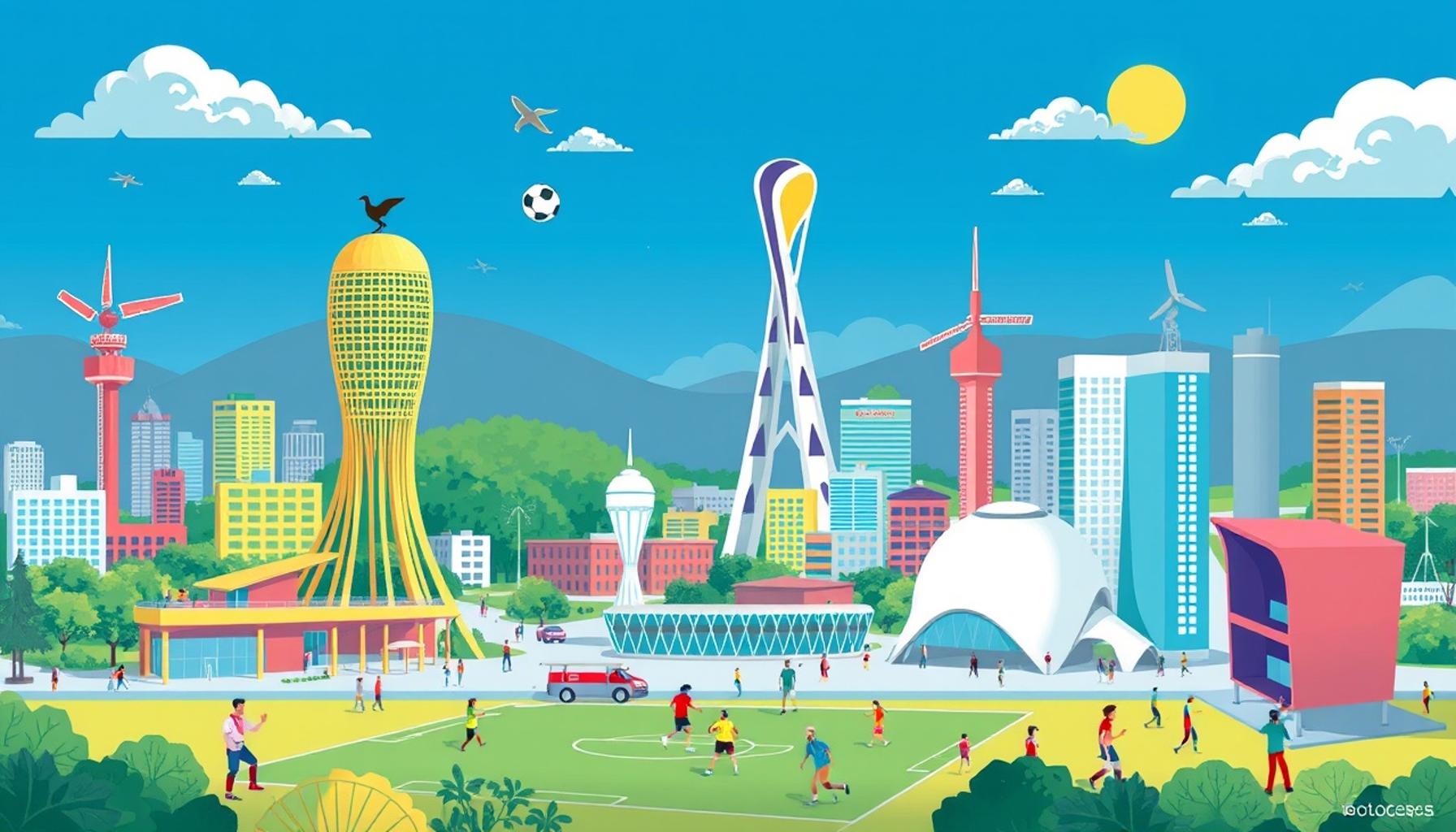
Transforming Host Cities for the 2026 FIFA World Cup
The excitement surrounding the upcoming 2026 FIFA World Cup is palpable, not just among die-hard soccer fans, but also within the communities of the host cities: the United States, Canada, and Mexico. As the world prepares for this prestigious tournament, a remarkable evolution in sports infrastructure is taking place to accommodate the expected surge of visitors, athletes, and international media. The focus is not only on enhancing the facilities but also on transforming the urban landscapes of cities like Los Angeles, Atlanta, and Philadelphia.
Central to this transformation are significant upgrades to stadiums and sports facilities. For instance, Atlanta’s Mercedes-Benz Stadium, which opened in 2017, features a retractable roof and an innovative cooling system, setting the stage for comfortable viewing experiences. The city is not stopping there; plans are underway to implement cutting-edge technology that enhances fan engagement through mobile applications and augmented reality experiences. Such advancements exemplify the modern stadium upgrades aimed at enriching the spectator experience.
Improving Transportation Networks
Another critical area of development is in transportation. The logistics of hosting a global event like the World Cup demand seamless mobility solutions. Cities are investing heavily in transportation improvements that range from expanding rail networks to enhancing bus services. For example, Los Angeles is developing its metro system, including light rail projects that will connect stadiums to major transport hubs, making it easier for fans to travel between events. By prioritizing public transit, cities not only alleviate congestion but also promote an eco-friendly approach to travel during the tournament.
Urban Development and Sustainability
In addition to stadium and transportation upgrades, urban development initiatives are crucial for reimagining the host cities. Investments are being made to revitalize neighborhoods surrounding sports venues, creating vibrant commercial spaces and improving public amenities. This includes parks, restaurants, and tourist attractions that enhance the experience for both attendees and residents. In Philadelphia, for instance, initiatives have emerged to integrate historic sites into the urban landscape, marrying the charm of local culture with modern infrastructure. The focus on sustainability is evident through green building practices and initiatives aimed at minimizing the carbon footprint of the event.
As these cities enhance their sports infrastructure, they are not solely preparing for a temporary influx of visitors; they are crafting legacies that will benefit local communities long after the final whistle of the World Cup has blown. By merging innovative designs with environmentally conscious practices, these urban centers are positioning themselves not just for the World Cup, but as players in the global sporting arena for years to come.
As we take a closer look at the intricate web of strategies and groundbreaking innovations shaping these host cities, it becomes clear that the efforts underway herald a new era of sports infrastructure—one where the legacy of the 2026 FIFA World Cup will undoubtedly leave a lasting imprint.
Strategic Investments in Stadium Enhancements
The evolution of sports infrastructure in the host cities of the 2026 FIFA World Cup is marked by a concerted effort to create state-of-the-art stadiums that not only host matches but also cultivate unforgettable experiences. As cities prepare to welcome millions of fans, upgrades to existing facilities and the construction of new venues are reshaping the sporting landscape. For example, Miami’s Hard Rock Stadium has been undergoing significant renovations to improve seating capacity, sightlines, and fan amenities, ensuring that it meets international standards for a global event.
Stadium enhancements are not just about aesthetics; they encompass various modern technological integrations. It’s a trend across all host cities that these venues will feature:
- Advanced Audio-Visual Systems: High-definition screens and cutting-edge sound technology will ensure fans enjoy dynamic and engaging content.
- Wi-Fi Connectivity: Robust internet access will allow spectators to share their experience in real time, enhancing engagement through social media.
- Smart Stadium Features: Mobile applications designed for navigation, ticketing, and food and beverage ordering are fundamental to improving the overall fan experience.
Moreover, accessibility is a key consideration in these renovations. With a growing emphasis on inclusivity, cities are focusing on making venues accessible to all, including those with disabilities. For example, Las Vegas’ Allegiant Stadium is designed with various accommodations in mind, ensuring that every fan can enjoy the matches comfortably.
Leveraging Community Impact
Beyond the immediate sports facilities, the broader community impact of these upgrades is becoming a focal point. Each host city is addressing how infrastructure improvements can provide long-term benefits to local residents. Atlanta plans to leverage its upcoming World Cup role as a catalyst for urban regeneration, where stadium developments are part of larger public-private partnerships aimed at revitalizing neighborhoods. Such initiatives foster localized economic growth, create jobs, and enhance the overall quality of life for residents.
In addition, the updated sports venues will serve as multi-purpose facilities post-World Cup, ensuring that they can host a variety of events that benefit the community. From concerts to local sports leagues, these structures are positioned to be community hubs.
As we delve deeper into the evolution of sports infrastructure in the host cities of the 2026 World Cup, the overarching theme of resilience and innovation stands out. The commitment to creating modern, multifunctional stadiums, complemented by comprehensive urban strategies, exemplifies how host cities are not only preparing for a global audience but are also investing in their futures.
| Advantage | Description |
|---|---|
| Enhanced Infrastructure | The substantial upgrades in stadiums and public facilities cater to a larger influx of fans, enhancing their overall experience. |
| Economic Boost | Investment in sports infrastructure leads to job creation and stimulates local businesses, contributing to sustained economic growth. |
As host cities prepare for the 2026 World Cup, the evolution of sports infrastructure illustrates a commitment not only to global sporting excellence but also to enhancing local communities. Enormous investments are being channeled into renovations and state-of-the-art facilities, ensuring that fans from around the world can enjoy the matches in comfort and style. Not only does this promise an elevated spectator experience, but it also leads to significant economic benefits, as new jobs proliferate and businesses thrive in the wake of this growth.Cities like Los Angeles and Miami are reimagining their sporting venues, making them adaptable for various events beyond soccer, which keeps the excitement alive long after the World Cup ends. This evolution also means incorporating modern technology, ensuring that everyone, from players to fans, enjoys a seamless experience. Such expansions also highlight sustainability, with eco-friendly designs coming to the forefront, reflecting a collective responsibility toward the environment. This is about more than just sports; it’s about cultivating a legacy that reinforces community pride, fostering inclusivity, and setting a benchmark for future international events. As 2026 approaches, the transformative journey of these host cities will captivate many and echo well beyond the tournament.
New Developments in Training Facilities and Transportation
As host cities gear up for the 2026 FIFA World Cup, efforts extend beyond stadium renovations to encompass pioneering training facilities and transportation solutions that reflect the demands of such a prestigious event. Cities like New York and Los Angeles are investing heavily in enhanced training infrastructures that can cater to participating teams while also benefiting local athletes and communities long after the tournament concludes.
Training venues are increasingly designed to be top-tier, featuring various amenities that encourage athlete performance and recovery. For instance, the development of dedicated training complexes involves multifaceted approaches, such as:
- Climate Control Systems: These innovations are essential to ensure that training conditions can be adjusted to mimic game day environments, a crucial aspect for teams preparing for matches in different weather conditions.
- Multi-sport Facilities: By incorporating various sports, these venues support a wide range of athletic programs, fostering community engagement and encouraging youth participation in sports.
- Technology Integration: Advanced sports science technology, including performance analytics and recovery solutions, will help teams maximize training efficiency while providing insights for coaches and players.
Moreover, the significance of transportation infrastructure cannot be overstated in ensuring smooth travel for teams, officials, and fans alike. Host cities are actively focusing on enhancing public transit networks, making them more accessible and efficient. In Dallas, for example, the transportation upgrades include:
- Expanded Light Rail Systems: New lines are being constructed and existing ones bolstered to connect major areas, including stadiums and training facilities, with quick and reliable transit options.
- Dedicated Shuttle Services: Enhanced shuttle services are planned to operate during the tournament, ensuring fans can easily move between various event locations without hassle.
- Active Mobility Initiatives: Incorporating bike lanes and walkable areas surrounding venues demonstrates a commitment to sustainable solutions designed to encourage the use of alternative transportation modes.
Looking ahead, the focus on sustainability is becoming indispensable. Many host cities are committing to environmentally friendly building practices and energy-efficient technologies. For instance, San Francisco’s project development plans heavily emphasize green construction methods, such as using recycled materials and incorporating renewable energy sources, creating a model for future infrastructure endeavors.
Community Engagement and Cultural Integration
As stadiums and facilities are constructed or renovated, fostering a sense of community and cultural representation remains a priority. Host cities recognize that the World Cup is not merely a sporting event but a cultural phenomenon that can enhance local identity. Efforts are underway to incorporate local art, history, and community narratives into the infrastructure, ensuring venues reflect their surroundings.
For example, Seattle is planning to use public art installations as part of its stadium design, celebrating local artists and creating a unique experience for visitors. The city aims to turn each venue visit into an immersive cultural journey, captivating audiences and establishing a strong emotional connection.
In essence, the evolution of sports infrastructure in host cities of the 2026 World Cup is a multifaceted endeavor driven by advancements in training facilities, sustainable practices, and cultural integration. This evolution illustrates how the anticipation of global events can serve as a catalyst for larger social and economic transformation within host communities.
Conclusion
As we look towards the 2026 FIFA World Cup, the evolution of sports infrastructure in host cities like New York, Los Angeles, Dallas, and Seattle stands as a testament to the transformative power of major sporting events. These cities are not simply updating their facilities; they are reimagining their approach to sports and community engagement, paving the way for lasting benefits that extend well beyond the tournament.
The emphasis on sustainable construction and community integration signals a commitment to environmentally responsible and culturally reflective practices. By incorporating local narratives and art into stadium designs and investing in multi-functional training grounds, the host cities are ensuring that the World Cup resonates deeply with both residents and visitors alike.
Furthermore, advancements in transportation infrastructure—from expanded light rail systems to enhanced shuttle services—guarantee efficient mobility for the thousands of fans and participants. These improvements not only facilitate access during the tournament but also promise a long-term positive impact on urban connectivity.
In summary, the evolution of sports infrastructure for the 2026 World Cup encapsulates a broader narrative of urban renewal, community pride, and environmental consciousness. As these host cities lay the groundwork for an unforgettable global event, they are simultaneously crafting a legacy that promotes health, inclusivity, and cultural enrichment for generations to come. The anticipation is not just about the matches that will be played, but a pioneering leap towards a more sustainable and engaged future in sports.