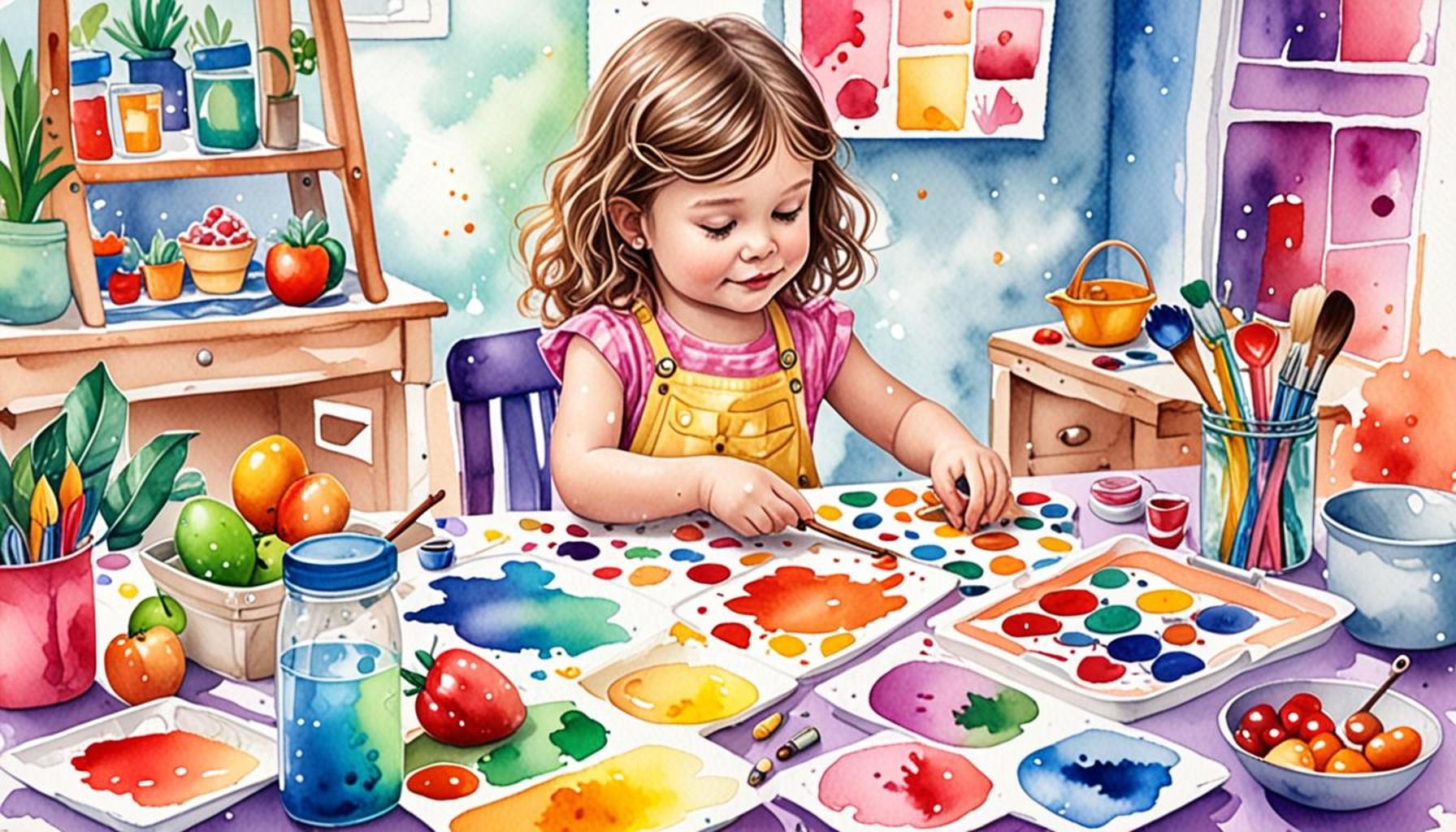
Imaginative Play Key Role in Child Development Creating Fantastical Worlds

Unleashing Creativity Through Imaginative Play
Imaginative play is a cornerstone of childhood development, allowing children to explore new realms beyond their everyday experiences. This form of play not only fosters creativity but also enhances cognitive and social skills. As children engage in creating fantastical worlds, they build essential life skills while having fun.
Research indicates that imaginative play contributes significantly to various aspects of growth:
- Cognitive Development: Problem-solving and critical thinking skills are nurtured through role-play and storytelling.
- Social Skills: Children learn cooperation and negotiation when playing together, enhancing their ability to work in teams.
- Emotional Intelligence: Role-playing allows kids to express their feelings and understand the emotions of others.
The relevance of imaginative play extends beyond mere entertainment; it serves as a vital framework for holistic child development. In this article, we will explore the Top 5 benefits of imaginative play and how it shapes the future of our young ones. Prepare to dive into a world where creativity knows no bounds!
Top 5: The Importance of Imaginative Play in Childhood Development: Creating Fantastic Worlds
Imaginative play is not merely a pastime; it’s a crucial building block for children’s growth and development. Through the creation of fantastical worlds, children learn to navigate their emotions, increase their creativity, and develop essential social skills. In this article, we will delve into the top five reasons why imaginative play is vital for children’s development, highlighting how this playful exploration contributes to a child’s holistic growth.
5. Fostering Creativity and Innovation
Imaginative play provides children with a realm where creativity flows freely, unburdened by the constraints of the real world. This freedom encourages children to think outside the box, fostering an environment conducive to innovation. Consider a child who becomes a space explorer charting unknown galaxies or a chef creating the world’s most delightful dessert. While these roles may seem fanciful, they challenge the child to devise creative solutions to hypothetical problems encountered on these adventures.

According to a study published by the American Journal of Play, children who engage in imaginative play demonstrate heightened creative abilities. These skills transfer into other disciplines, supporting pursuits in art, science, and even business. For instance, a child who regularly engages in storytelling may develop a keen ability for narrative structure and composition, laying the groundwork for future careers in writing or film-making.
4. Developing Emotional Intelligence
Understanding and managing emotions is critical in everyday life, and imaginative play offers a playground for emotional exploration. By assuming different roles, children navigate complex emotional landscapes, enhancing their emotional intelligence in the process. Playing a character like a teacher or firefighter, children must empathize with the responsibilities and emotions inherent in these roles.
For example, when acting as a caregiver to dolls or stuffed animals, a child engages in scenarios relating to empathy and nurturing. This role-playing helps them recognize and process their emotions, providing essential lessons in compassion and sympathy. The skills gained through these activities foster better personal relationships and contribute significantly to professional environments, where emotional acuity is valued.
3. Enhancing Social Skills
Social interactions within imaginative play are arenas for children to fine-tune their interpersonal abilities. In group settings, children navigate social dynamics, learning to negotiate roles and collaborate effectively with peers. These interactions encourage children to become adept communicators and cooperative team players.
- Collaboration: Successful group play often requires teamwork, where children must align their objectives and strategies.
- Conflict Resolution: Disagreements during play are natural, providing critical lessons in conflict mediation and resolution.
- Communication Skills: Assuming different roles helps children practice diverse communication styles, both verbal and non-verbal, enhancing their interactional skills.
These experiences do more than simply teach kids how to make friends; they contribute significantly to the development of leadership qualities and the management of diverse group dynamics, skills that are essential in both academic and professional settings.
2. Enhancing Cognitive Development
Cognitive skills are paramount for achieving academic excellence and navigating life’s challenges. Imaginative play serves as a mental exercise, promoting cognitive achievements such as problem-solving, memory enhancement, and critical thinking. When children concoct imaginary scenarios, they strengthen vital neural connections.
For instance, building a fantastical castle from blocks requires not only creativity but structural understanding and spatial awareness. A Journal of Experimental Child Psychology article underscores that children participating in imaginative play display superior problem-solving abilities and narrative comprehension compared to peers less engaged in such activities. These cognitive advancements underpin future learning and intellectual pursuits, making imaginative play an indispensable tool for cognitive development.
1. Building Confidence and Self-Esteem
Confidence and self-esteem are vital components of a child’s identity, and imaginative play plays a significant role in their development. Through imaginative scenarios, children experience successes and failures in a safe environment, allowing them to build resilience and a robust sense of self-worth. When a child imagines embarking on a treasure hunt and locating the treasure, they experience a profound sense of accomplishment.
Such victories within their imaginative worlds build essential self-confidence, reinforcing their belief in their abilities. Successfully navigating imagined challenges provides a template for tackles real-world tasks, turning setbacks into opportunities for learning and growth. This newfound self-assuredness encourages children to take risks, try new things, and grow intellectually and socially, paving the way for a lifetime of personal and academic achievements.
In conclusion, imaginative play is not just a way for children to pass the time; it is an indispensable facet of development. From fostering creativity and emotional intelligence to enhancing social skills and cognitive abilities, constructing fantastic worlds is foundational to a child’s growth. Encourage this vital play, and watch your child flourish, well-equipped to navigate the complexities of life. By championing imaginative play, we open the door to profound exploration, discovery, and development, shaping little dreamers into capable individuals ready to conquer the world.
| Category | Details |
|---|---|
| Cognitive Development | Imaginative play enhances creativity and problem-solving skills, enabling children to explore new ideas and concepts in a safe environment. |
| Social Skills | Interacting with peers during imaginative play fosters communication, teamwork, and empathy, essential skills for navigating social landscapes. |
| Emotional Regulation | Engaging in role-play allows children to process emotions, express feelings, and understand different perspectives, which is crucial for emotional intelligence. |
| Cultural Awareness | Exploring diverse narratives through imaginative games exposes children to various cultures and worldviews, enriching their understanding of global diversity. |
The world of imaginative play is rich and multifaceted, playing a fundamental role in the development of children. As they create their own scenarios, they exercise their cognitive abilities, allowing their minds to roam free and generate solutions to challenges, thus reinforcing critical thinking skills. These playful scenarios are not merely entertainment; they are vital learning experiences where children become architects of their own narrative worlds.Moreover, the social aspect of imaginative play cannot be overlooked. When children collaborate in constructing stories or engaging in role-play, they develop their communication skills and learn the importance of sharing space and working together. Through negotiation and collaboration, they cultivate not only camaraderie but also vital life skills that prepare them for future social interactions.Emotional health is another significant benefit reaped from imaginative play. Children often use these creative scenarios to act out their feelings. Whether they are embodying a superhero or playing house, they navigate complex emotions, thereby enhancing their emotional regulation capabilities. This process enables them to articulate their feelings more effectively and fosters resilience as they learn to cope with various situations.Finally, by diving into imaginative realms that reflect diverse cultures and experiences, children gain a broader perspective of the world around them. This early exposure to various narratives cultivates cultural awareness and empathy, preparing them to embrace diversity in their interactions and future endeavors. Through the whimsical lens of imaginative play, children not only discover who they are but also learn to appreciate the rich tapestry of humanity.
Frequently Asked Questions About Imaginative Play in Child Development
What is imaginative play and why is it important for children?
Imaginative play, often referred to as pretend play, is when children create stories and scenarios, often involving role-playing and the use of props. This form of play is crucial as it helps in developing cognitive, social, and emotional skills. By engaging in imaginative play, children enhance their ability to solve problems, improve language skills, and learn to empathize with others by stepping into different roles.
At what age do children typically begin imaginative play?
Children often begin to engage in imaginative play as early as 18 months to 2 years old. During this age, they start using everyday objects in novel ways and create simple narratives. By age 3 to 4, their play becomes more sophisticated, involving complex storytelling and character development, providing greater insights into their inner worlds.
How can parents or caregivers encourage imaginative play?
Parents and caregivers can encourage imaginative play by providing a safe and stimulating environment for creativity. Offering open-ended toys, such as blocks, costumes, and art materials, allows children to invent and explore. Additionally, reading stories together and participating in imaginative scenarios with them can further enhance this developmental process.
Does imaginative play have any impact on learning and academic success?
Indeed, imaginative play can have a profound impact on a child’s learning and academic success. Through such play, children often develop improved memory, language skills, and the ability to focus, all of which are essential for academic achievement. Furthermore, the creativity fostered during imaginative play can lead to enhanced problem-solving abilities and a love for learning.
Can the lack of imaginative play affect a child’s development?
Yes, the absence of imaginative play may potentially impact a child’s development. Without opportunities for creative expression, children might face challenges in developing empathy, communication skills, and adaptive problem-solving abilities. Engaging in imaginative play is pivotal for building resilience and understanding complex social dynamics.
Conclusion
As we draw the curtain on our exploration of the importance of imaginative play in child development, it becomes clear that this cherished pastime is far from mere child’s play. Rather, it’s a cornerstone of cognitive, social, and emotional growth, a sentiment echoed across numerous studies and expert opinions.
Imaginative play equips children with critical skills needed for navigating real-world challenges. By creating their own worlds, children learn problem-solving, adaptability, and decision-making. These activities enhance language development and communication skills as young storytellers engage in dialogue with peers or imaginary characters. Furthermore, imaginative play fosters creativity, encouraging divergent thinking and innovation, essential skills in our rapidly evolving world.
The social benefits of imaginative play are undeniable. Within these fantasy realms, children practice empathy, cooperation, and negotiation, laying the groundwork for complex interpersonal skills. Emotional intelligence also flourishes as children explore various scenarios, allowing them to process feelings and experiences creatively.
Thus, the importance of nurturing imaginative play cannot be overstated. Whether through direct participation or providing resources and environments conducive to creativity, adults play a vital role in facilitating these transformational play experiences. As society continues to value structured learning, this article serves as a reminder of the immense benefits uncovered within the seemingly simple act of play.
In embracing and recognizing how crucial imaginative play is in children’s development, we are investing in a future generation equipped with the tools to innovate, relate, and thrive. As the line between reality and fantasy continues to blur in the digital age, imaginative play offers a timeless avenue for children to explore, learn, and grow. In essence, promoting imaginative play is planting the seeds for a limitless future.